Potentiostat SENSIT BT
- Manufacturer
- Palmsens
- HTTS ref.
- HTS-ELEC-0033
- HTDS ref.
- SENSIT BT
- Division
- Électrochimie & Tests

Gallery and technical drawings


Description
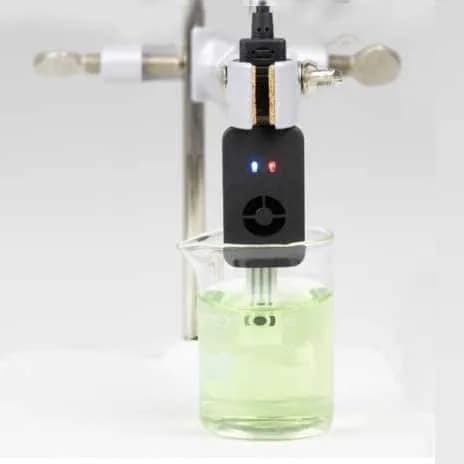
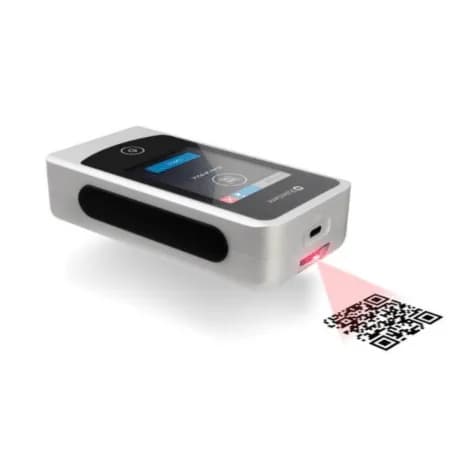
Le Sensit BT est idéal pour les applications de capteurs électrochimiques. Ce potentiostat se connecte via Bluetooth à votre smartphone ou tablette et se commande via l’application Android PStouch. Vous pouvez utiliser le port USB-C pour charger le Sensit BT ou vous connecter à un port USB classique de votre PC et contrôler le Sensit BT via notre logiciel pour PC PSTrace. Le Sensit BT prend en charge la plupart des techniques électrochimiques courantes, notamment la voltampérométrie cyclique, la voltampérométrie à ondes carrées et la spectroscopie d’impédance (FRA/EIS). Il existe en deux modèles: – Sensit BT. SPE : insertion directe d’électrodes inter-digitées sur le potentiostat (sans câbles) – Sensit BT. SNS : livré avec des câbles pour des mesures électrochimiques trois électrodes (deux voies indépendantes ou bipotenstiostat) Le SENSIT BT supporte la quasi totalité des techniques électrochimiques :
Potentiostat double voies portable et sans fil
Key features
- EIS jusqu’à 200 kHz
- Compliance / polarisation : -1,7 V à +2 V
- Gammes de courant : de 100 nA à 5 mA (max ±3 mA)
Technical specifications
- mode
- mode mode
- Power
- USB / battery
- range
- range
- Weight
- 75 g
- General
- Low Speed High Speed Max Range
- PSTrace
- Software for Windows ................................................................................................7
- PStouch
- App for Android ..........................................................................................................8
- details
- [email protected]
- > 100 nA,
- current range, current range,
- Sensit BT
- SPE and SNS Configurations ...................................................................................2
- thickness
- mm and 0.8 mm
- 1 mA, 5 mA
- 5 mA 5 mA
- Dimensions
- 75 x 55 x 23 mm (excl. cable)
- ▪ Matlab
- ▪ Windows 7, 8, or 10 (32-bit or 64-bit)
- ▪ Origin
- Minimum PC requirements are:
- 4 uA, 8 uA,
- 6 uA, 13 uA, 6 uA, 13 uA,
- ▪ Storage
- 4000 datapoints on-board
- Battery life
- 12 hours at max. power consumption
- Potentiostat
- Low Speed High Speed Max Range
- Sensor pitch
- 2.54 mm Cable length: 40 cm
- 16 uA, 32 uA,
- 25 uA, 50 uA, 25 uA, 50 uA,
- Communication
- USB (type C) and Bluetooth (Classic and BLE)
- SENSIT BT.SPE
- SENSIT BT.SNS
- current range
- 100 nA current 100 nA current
- ▪ Bandwidth
- 250 kHz
- 63 uA, 125 uA,
- 100 uA, 100 uA,
- Current ranges
- 100 nA to 5 mA (max ±3 mA)
- Low Speed mode
- for scan rates up to 1 V/s or a bandwidth of 100 Hz.
- Max Range mode
- a combination of the Low and High Speed modes for optimal
- Storage memory
- 500 MB for storing up to 16 million datapoints
- current range.
- are available.
- current ranges
- selected selected
- ▪ Dimensions
- 75 x 55 x 23 mm (excl. cable)
- High Speed mode
- for high scan rates and frequencies.
- MethodSCRIPT™
- EmStat Pico Scripting Language ................................................................9
- ▪ Quick Start
- ▪ Quick Start
- ▪ USB-C cable
- ▪ USB-C cable
- More information
- www.palmsens.com/pico
- Current resolution
- 0.006% (5.5 pA on 100 nA range)
- Mode basse vitesse
- pour des taux de balayage allant jusqu’à 1 V/s ou une bande passante de 100 Hz
- Mode haute vitesse
- pour des taux de balayage et des fréquences élevés
- ▪ PSTrace Manual
- ▪ PSTrace Manual
- EIS frequency range
- 0.016 Hz to 200 kHz
- ▪ 3-year warranty
- ▪ 3-year warranty
- ▪ Frequency range
- 0.016 Hz to 200 kHz
- ▪ Maximum current
- ±3 mA
- Maximum sensor width
- 11 mm
- ▪ Current accuracy
- < 0.5 % for < 1% of the < 1% of the
- ▪ Supports FRA/EIS
- NO YES NO
- Electrode connections
- RE, WE, CE Connectors: 2 mm banana
- Mode portée maximale
- une combinaison des modes basse et haute vitesse pour une gamme dynamique optimale du potentiel d.c
- available data and to
- title or appearance.
- the legend to see the
- legend to change its
- ▪ Ac-amplitude range
- 1 mV to 0.25 V rms, or 0.708 V peak-peak
- ▪ Compliance voltage
- -2.0 to +2.3 V
- Full dc-potential range
- -1.7 V to +2 V
- < 2% for 100 nA < 2% for
- < 2% for
- ▪ Rugged carrying case
- ▪ Rugged carrying case
- Click on a measurement in
- Click on a curve in the
- Select current ranges for
- Switch between plots if
- developed the EmStat Pico
- the world’s smallest
- ▪ Max. acquisition rate
- 100 1000 100
- ▪ 2x spare SPE connector
- ▪ 5x croc clips
- ▪ Dummy Cell SPE version
- ▪ Dummy Cell
- ▪ Full dc-potential range
- -1.2 to +2 V -1.7 to +2 V -1.7 to +2 V
- ▪ Available current ranges
- 100 nA, 2 uA, 100 nA, 1 uA, 100 nA, 1 uA,
- 250 uA, 500 uA, 200 uA, 1 mA,
- 200 uA, 1 mA,
- auto ranging and the starting
- curves with different units
- ▪ Applied potential accuracy
- < 0.2% < 0.5% < 0.5%
- ▪ Dynamic dc-potential range
- 2.2 V 1.2 V 2.6 V
- ▪ Measured current resolution
- 0.006% of selected current range
- ▪ On-board temperature sensor
- ±0.25 °C
- ▪ Operation temperature range
- 0 °C to +40 °C
- ▪ Electrometer amplifier input
- > 1 TΩ // 10 pF
- ▪ Measured potential resolution
- 56 μV
- ▪ PSTrace software on USB stick
- ▪ PSTrace software on USB stick
- ▪ Applied dc-potential resolution
- 537 μV 395 μV 932 μV
- Two SPE Sensor connectors, compatible
- With cable for connecting to any kind of
- with most Screen-Printed Electrodes /
- electrochemical sensor or cell
- ▪ Access to software on my.palmsens.com
- ▪ Access to software on my.palmsens.com
- Allowed sensor Between 0.1 Electrode connections
- RE, WE, WE2, CE
Applications
- Mesures de terrain (sur smartphone, tablettes, ordinateur)
- Travaux-Pratiques
- Laboratoire
HTTSystems product sheet
Download the datasheet in our colours and contact details, or read it full screen.
Request a quote
Reference HTS-ELEC-0033 is carried into your file. You fill in the context, an engineer takes it from there.
Request a quoteTalk to an engineer
A question about installation, consumables or compatibility before pricing? Our engineers answer from Douala.
Ask the questionClose to this one
Same family, or same division when the family is thin.