Analyseur des résidus chimiques foram®3
- Manufacturer
- Foster+Freeman
- HTTS ref.
- HTS-SUD-0091
- HTDS ref.
- ANALYSEUR POUR SCENES DE CRIME FORAM3
- Division
- Sûreté & Détection
Gallery and technical drawings
Description
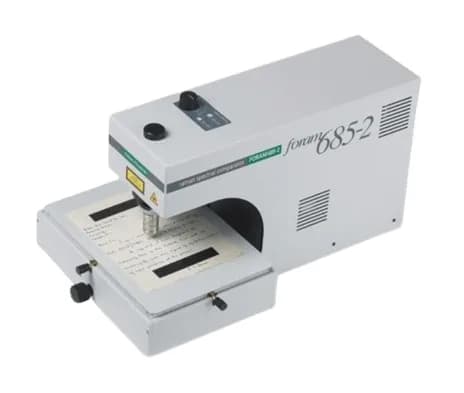
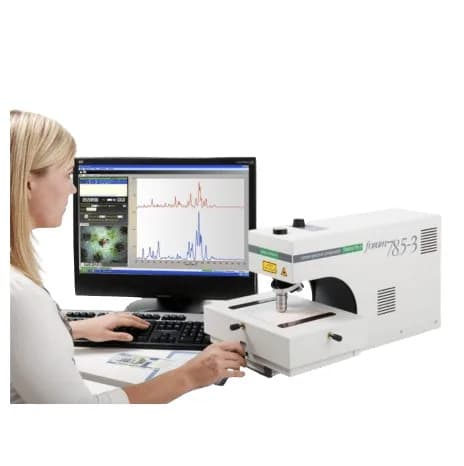
Le foram®3 fonctionne selon un procédé avancé qui permet de détecter les résidus chimiques ou les traces invisibles sur des documents ou objets sans les altérer. La surface à analyser est placée sur un plateau spécifique, puis un film polymère transparent est appliqué sur celui-ci. Le système expose ensuite la surface à une charge électrostatique, permettant ainsi de capturer les résidus ou traces invisibles. L’analyse détecte les différences de conductivité ou de composition chimique, mettant en évidence les traces laissées par des substances ou des modifications. Ces informations sont ensuite analysées et traitées pour fournir une image claire des éléments invisibles, essentielle pour les investigations criminalistiques.
Le foram®3 est l'outil idéal pour l’analyse des résidus chimiques dans le domaine médico-légal. Simple d’utilisation, il permet de capturer des traces subtiles de substances telles que les encres, les résidus de poudre, les éclats et traces de peinture sans endommager ni contaminer les éléments originaux.
Key features
- Interface utilisateur intuitive pour une prise en main rapide en contexte médico-légal
- Conception compacte et ergonomique, idéale pour les environnements de laboratoire à espace restreint
- Installation simple, ne nécessitant aucune modification structurelle du poste de travail
- Détection avancée des résidus et substances microscopiques sur documents, surfaces et objets liés à une scène de crime
- Haute sensibilité analytique, permettant l’identification précise de traces même infimes
Technical specifications
- Tel
- +44 (0)1386 768 050 | [email protected]
- Paints
- High Explosives
- Cosmetics
- Passport Laminates
- Order Code
- FORAM 785-3
- of accuracy.
- authenticate passports, ID cards
- • Solvents
- • Flavors, Fragrances and Cosmetics • Minerals and Inorganic Materials
- and artifacts.
- made on particles <5 microns in
- • Biochemicals
- • Dyes, Pigments and Stains • Minerals
- SPECTRAL RESOLUTION
- filters & comparison casework reports.
- Choice of Wavelengths
- Assisted sample selection Powerful signal processing Spectral Comparison
- better able to supress
- individual particles or fibres for background fluorescence to
- x450 on a 24" monitor.
- million times.
- Grossissement microscope
- x450
- Contact Foster+Freeman to
- microscope that can be fitted with using the SERS technique to numbers of spectra and for
- of two laser wavelengths.
- stage with fine spatial adjustment signal integration and averaging peak-to-peak correlator that
- • Aldehydes and Ketones
- • Sulfur and Phosphorus • Inorganic Materials
- analysis such as thin layer
- a great deal of information about
- the use of an integral video
- Results can be further improved it ideal for comparing large
- chromatography (TLC) and high
- polymer laminates, including the
- non-destructive nature of the
- the explosive gives.
- (HPLC), Raman spectroscopy can
- polymer compounds, particularly
- Raman spectroscopy is suitable
- Raman provides a low-cost
- Unlike conventional methods of
- Raman spectroscopy can provide
- studying organic samples prone
- spectra.
- Sample selection is assisted by
- similarity of two spectra, making
- Officer according to IEC/EN60825
- 2014 AVOID EXPOSURE TO BEAM
- examination of valuable paintings
- Positive identifications can be
- performance liquid chromatography
- ability to identify and discriminate
- • Polymer and Polymer Additives
- • Pesticides • Pharmaceuticals, Drugs and Antibiotics
- for the identification of pigments
- method of identifying explosives
- Unlike other Raman systems, Foram 3
- through the addition of a comprehensive library
- in the majority of paint types. The
- by the “signature” spectrum that
- disciminate lipsticks with high level
- useful when seeking to
- • Food Additives and Food Packaging
- • Semiconductor Chemicals • High Production Volume Chemicals
- • Laser power up to 45 mW at source
- • Thermoelectrically cooled CCD array detector
- • Spectral resolution 6 wavenumbers
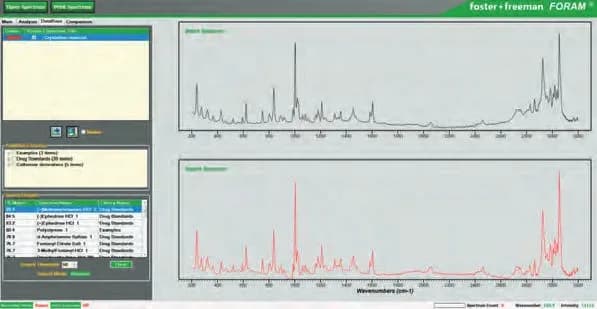
- • Chemometric routines, such as PCA, PQS, SNV, MSC
- • Spectral resolution 7 wavenumbers
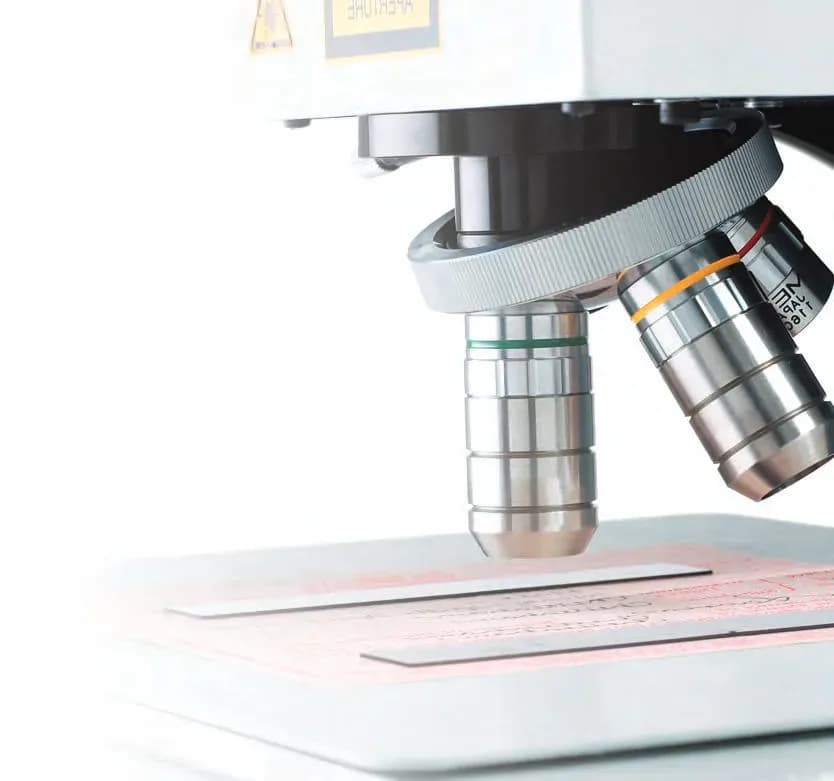
- • Objectives. 20x, 10x and 5x objective fitted as standard
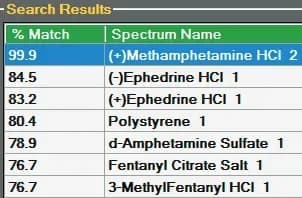
- • F+F Forensic Raman spectra library
- • Esters, Lactones, and Anhydrides • Hazardous Chemicals
- identifying and comparing substances of
- archiving with search and match facilities.
- fluorescence - particularly when instance.
- ensure accurate, reproducible
- Fast, non-destructive and highly effective,
- casework management software providing
- Raman spectroscopy is an ideal technique for
- automatic spectral comparisons and data
- • S.T.Japan Forensic Raman spectra library
- • Hydrocarbons • Hazardous and Toxic Chemicals
- spectrometers have been developed specifically
- of forensic Raman spectra for the identification
- for forensic examinations and include dedicated
- of unknowns.
- provide magnification of up to sample by more than one
- enquiries.
- while the 785nm infrared laser is 5 microns for the selection of
- baseline correction can remove the significance of their match.
- • External cavity stabilised laser system running at 685 ±5 nm
- DETECTOR
Applications
- Analyse des documents dans le cadre d’enquêtes judiciaires
- Détection précise des résidus chimiques et traces invisibles sur les documents et objets
- Vérification des documents suspects dans les laboratoires de police scientifique
- Examen non destructif des pièces à conviction, préservant leur intégrité
- Appui aux enquêtes de fraude documentaire, falsification et contrefaçon
Standards and compliance
HTTSystems product sheet
Download the datasheet in our colours and contact details, or read it full screen.
Request a quote
Reference HTS-SUD-0091 is carried into your file. You fill in the context, an engineer takes it from there.
Request a quoteTalk to an engineer
A question about installation, consumables or compatibility before pricing? Our engineers answer from Douala.
Ask the questionClose to this one
Same family, or same division when the family is thin.